
What Is Non-Emergency Medical Transportation (NEMT)?
Learn how NEMT works, who uses it, available ride types, coverage considerations and how to arrange a safe medical ride in Northeastern Pennsylvania.
Getting to a medical appointment can become difficult when you cannot drive, your family is unavailable, public transportation is not accessible, or a standard car cannot accommodate your mobility equipment.
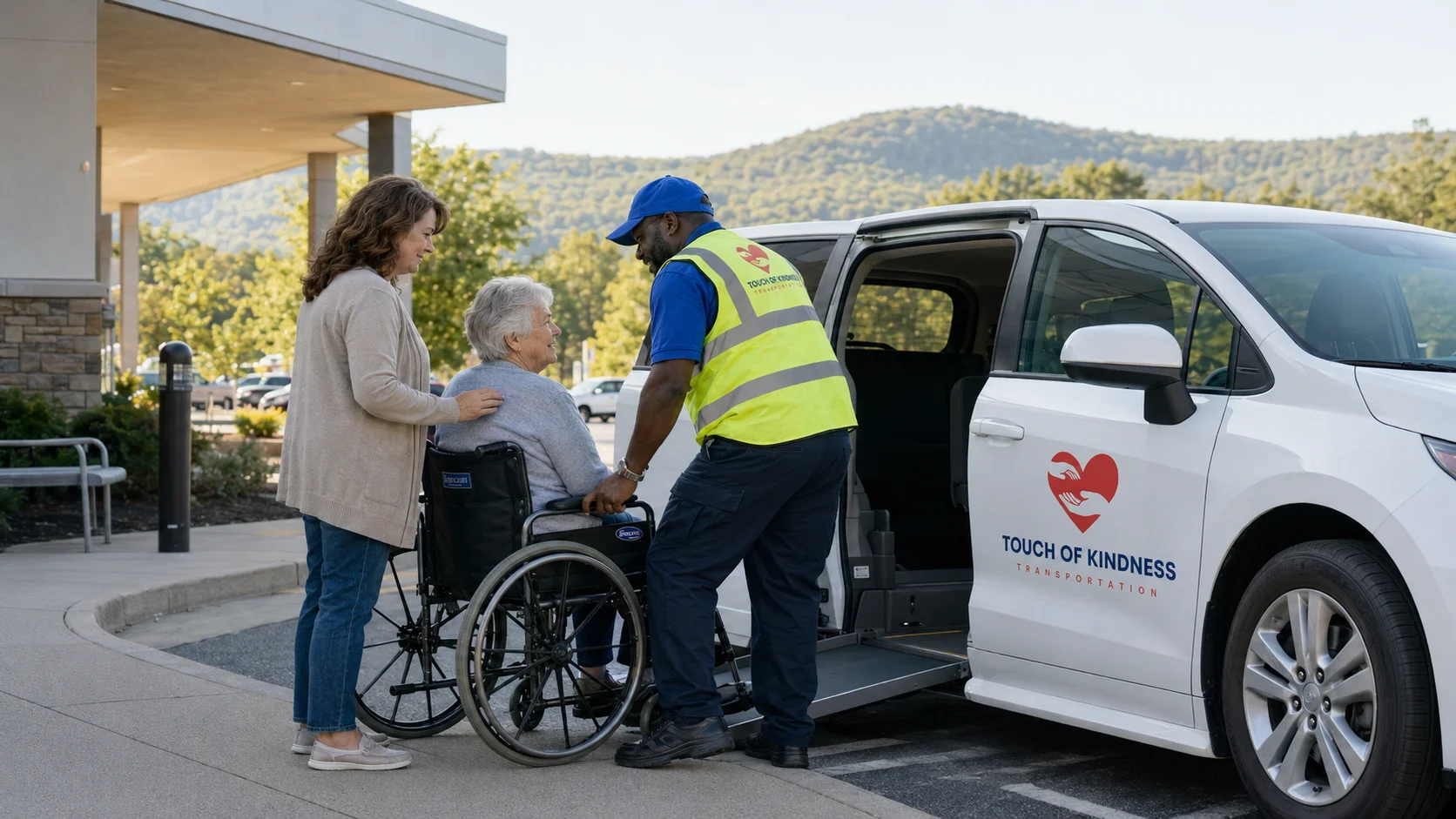
Non-emergency medical transportation, commonly called NEMT, helps medically stable passengers travel to and from healthcare appointments safely. It can support a person who uses a wheelchair, a dialysis patient with a recurring treatment schedule, a senior who no longer drives, or someone who needs an assisted ride home after a hospital stay.
This guide explains what NEMT is, how it differs from an ambulance and a regular rideshare, the types of transportation available, how insurance may affect payment, and how to arrange a medical ride in Northeastern Pennsylvania.
What Is Non-Emergency Medical Transportation?
Non-emergency medical transportation is scheduled or requested transportation for a medically stable person who needs help traveling to or from healthcare but does not require emergency medical treatment during the trip.
Depending on the passenger’s needs and the provider’s available fleet, NEMT may include:
- Ambulatory transportation for someone who can walk with limited assistance
- Wheelchair-accessible transportation for a passenger who remains in a wheelchair
- Non-emergency stretcher transportation for a medically stable passenger who must travel lying down
- Recurring rides for dialysis, chemotherapy, radiation or rehabilitation
- Transportation following a hospital discharge or outpatient procedure
- Longer-distance transportation to hospitals and specialists outside the passenger’s local area
NEMT is transportation—not emergency medical care. The vehicle and driver may be equipped to assist with mobility and securement, but the service does not replace an ambulance, emergency medical monitoring or treatment from an EMT or paramedic.
If someone has chest pain, severe trouble breathing, signs of a stroke, uncontrolled bleeding, loss of consciousness or another possible emergency, call 911.
Who Commonly Uses NEMT?
There is no single type of NEMT passenger. People use medical transportation for many different reasons, including age, disability, treatment side effects, temporary mobility limitations and lack of a suitable vehicle.
NEMT may be appropriate for someone who:
- Cannot drive because of age, disability, illness, injury or treatment
- Uses a manual wheelchair, power wheelchair, mobility scooter, walker or cane
- Cannot safely enter or exit an ordinary passenger vehicle
- Needs recurring transportation to dialysis or cancer treatment
- Is recovering from surgery and has been told not to drive
- Is leaving a hospital and needs an assisted ride home or to rehabilitation
- Lives alone or does not have a family member available to drive
- Needs to travel to a specialist outside the local area
- Cannot safely or practically use fixed-route public transportation
Using a private NEMT provider does not usually require the passenger to “qualify” in the same way an insurance or government transportation program does. Eligibility, medical-necessity documentation and covered destinations depend on the payer or program being used. Private-pay passengers should confirm the price and service details directly with the provider before booking.
NEMT vs. an Ambulance: What Is the Difference?
The most important difference is the passenger’s medical condition and whether medical care is required during transportation.
| Consideration | Non-Emergency Medical Transportation | Ambulance Transportation |
|---|---|---|
| Passenger condition | Medically stable | May be an emergency or a medically necessary non-emergency situation |
| Medical treatment during travel | Not provided | EMT or paramedic care may be provided when required |
| Common vehicle options | Ambulatory, wheelchair-accessible or stretcher-equipped vehicle | Ambulance with medical equipment and trained clinical personnel |
| Typical uses | Appointments, recurring treatment, stable discharge and rehabilitation trips | Emergencies and qualifying medically necessary ambulance trips |
| How it is arranged | Scheduled in advance or requested for an available same-day trip | Through 911 in an emergency or arranged medically for a qualifying non-emergency trip |
Original Medicare generally does not pay for routine transportation in a car, wheelchair van or other ordinary NEMT vehicle. In limited circumstances, Medicare Part B may cover medically necessary non-emergency ambulance transportation when using another type of transportation could endanger the patient’s health and Medicare’s requirements are met.
For a more detailed comparison, read Ambulance vs. NEMT vs. Ambulette.
What Types of NEMT Are Available?
The correct ride type depends on the passenger’s ability to walk, transfer, sit upright and travel safely with any mobility equipment.
Ambulatory Transportation
For someone who can walk independently or with limited assistance. A passenger may use a cane or walker but must be able to travel safely in the assigned vehicle.
Wheelchair Transportation
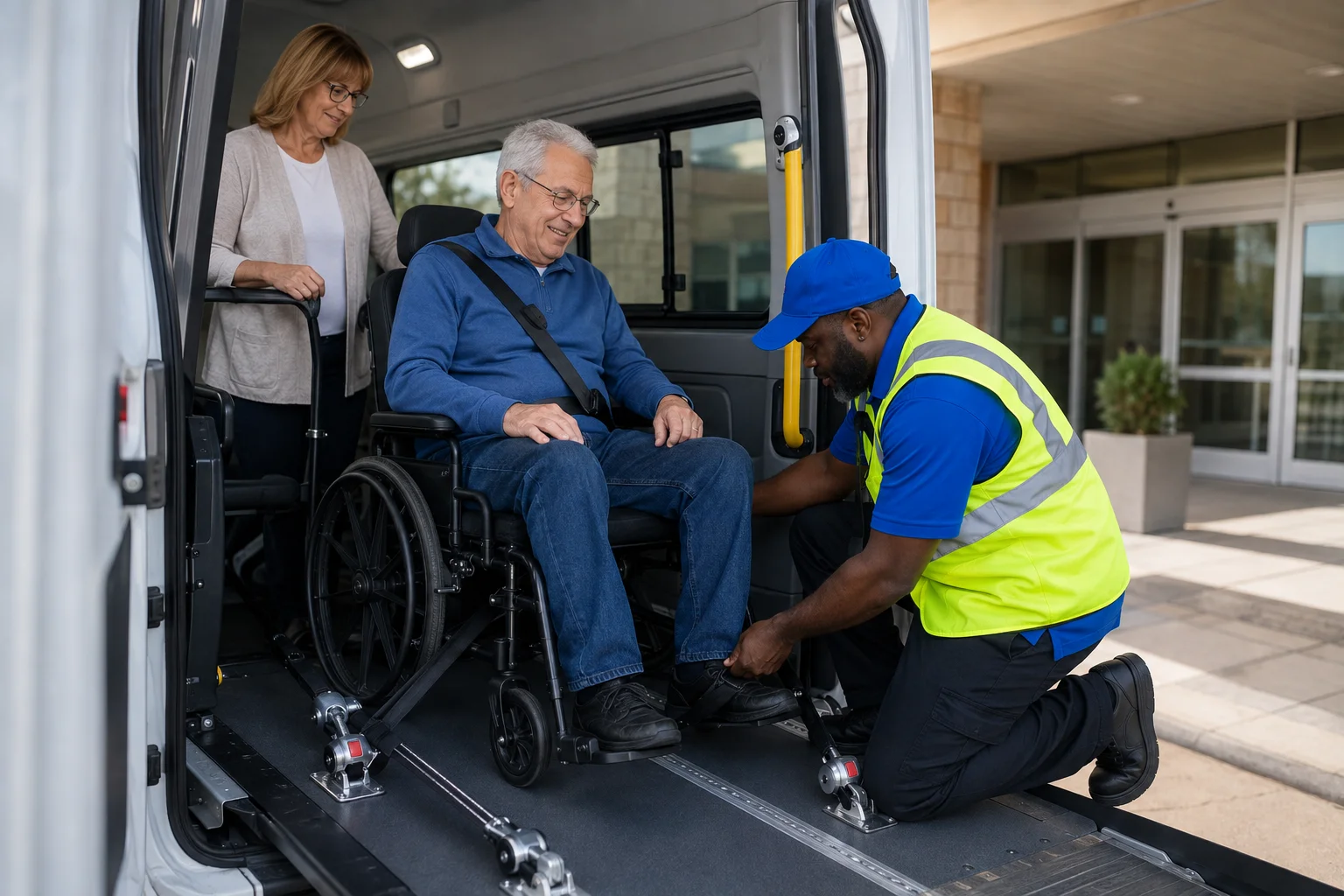
For a passenger who uses a wheelchair and needs an accessible vehicle with a ramp or lift and an appropriate securement system.
Non-Emergency Stretcher
May be appropriate for a medically stable passenger who cannot remain seated upright for the trip and does not need clinical care in transit.
Ambulatory transportation details
When booking, explain whether the passenger can manage steps, how far they can walk, whether they need an arm for balance and whether there are stairs or other barriers at the pickup location.
Wheelchair transportation details
Provide the wheelchair type, dimensions and approximate combined weight of the passenger and chair when requested. Tell the dispatcher whether it is a manual wheelchair, power wheelchair or mobility scooter and whether a caregiver will travel with the passenger.
Non-emergency stretcher transportation details
Stretcher transportation is not automatically interchangeable with a non-emergency ambulance. If the passenger needs oxygen management, medical monitoring, medication administration or clinical care during transportation, the discharging facility or healthcare professional should determine whether an ambulance or another level of care is necessary.
What Does Door-to-Door Assistance Include?
Transportation companies may use terms such as curb-to-curb, door-to-door and door-through-door differently. Ask the provider exactly where assistance begins and ends before booking.
Pickup and drop-off occur at the curb, with limited assistance beyond the vehicle.
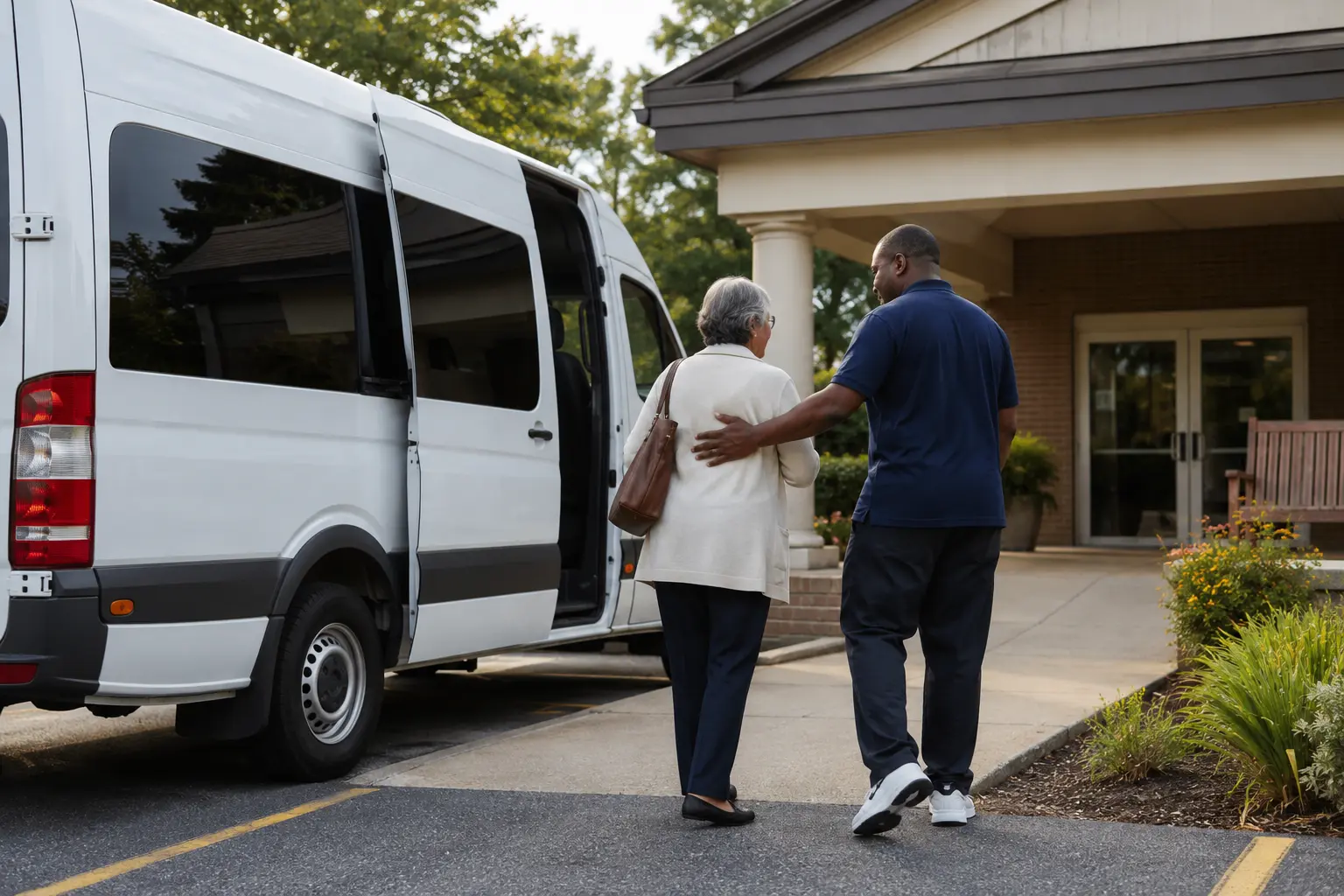
The driver meets the passenger at the entrance, assists them to the vehicle and helps them reach the agreed entrance after arrival.
Some providers may offer help beyond the entrance, but physical-assistance limits and facility rules must be confirmed in advance.
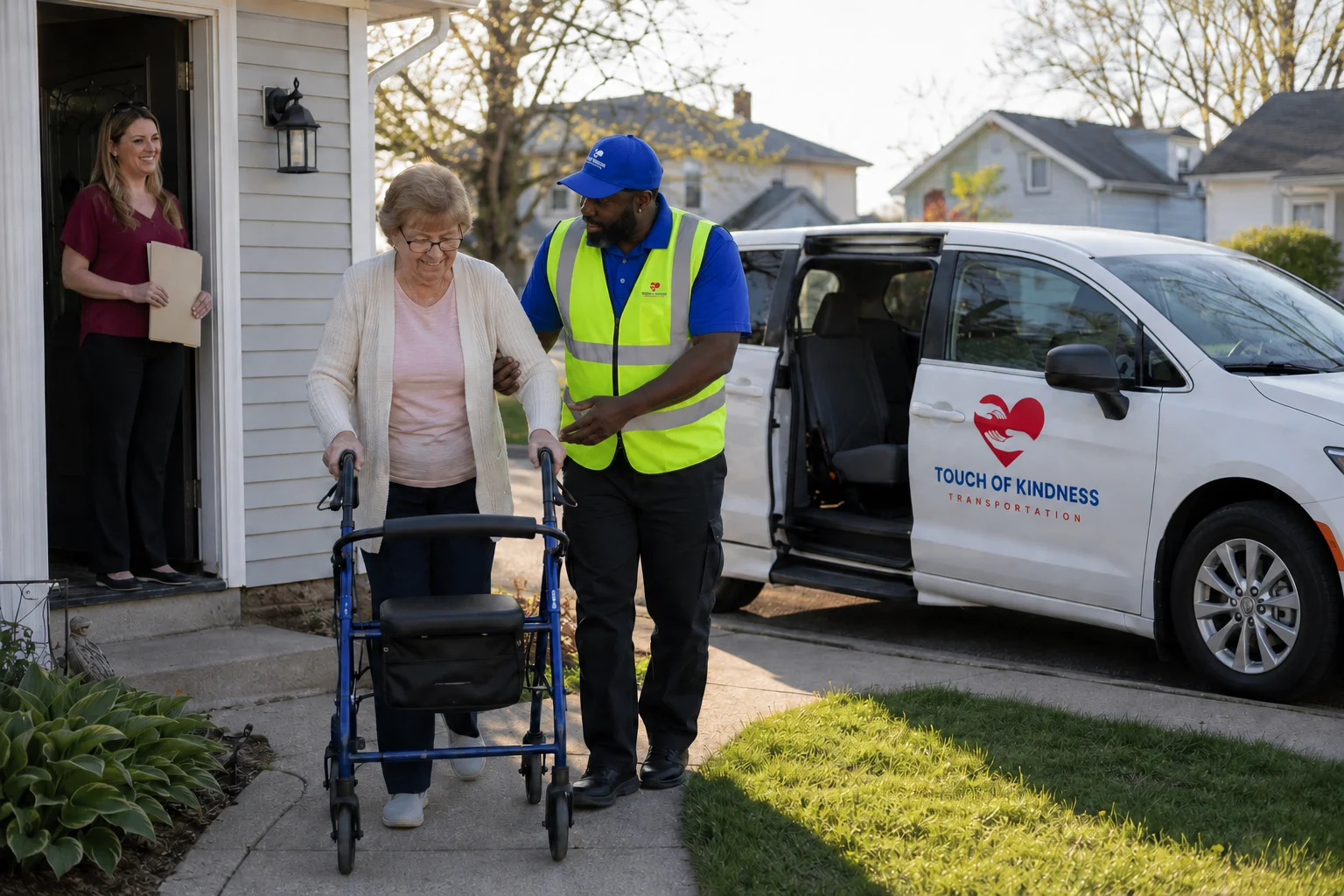
Touch of Kindness Transportation advertises compassionate door-to-door assistance, including support from the passenger’s door to the vehicle and toward the destination or waiting area. Tell the dispatcher about steps, narrow entrances, long hallways, mobility limitations or other access concerns when arranging the ride.
What Types of Medical Trips Can NEMT Serve?
The phrase “covered appointment” should be used carefully. A provider may be able to serve a destination even when an insurance plan does not pay for the trip.
Subject to availability, the passenger’s condition and the provider’s service capabilities, NEMT may be used for:
- Primary care and specialist appointments
- Dialysis treatments
- Chemotherapy, radiation and oncology appointments
- Physical therapy and rehabilitation
- Occupational or speech therapy
- Wound care and infusion appointments
- Behavioral health appointments
- Laboratory work and diagnostic imaging
- Cardiac or pulmonary rehabilitation
- Hospital discharge transportation
- Post-surgery transportation
- Nursing home and rehabilitation-facility transportation
Does Medicare or Medicaid Pay for NEMT?
Transportation coverage depends on the passenger’s insurance, eligibility, destination, medical need and local program rules. Never assume a ride will be covered simply because it is connected to healthcare.
Original Medicare
Original Medicare does not generally cover routine transportation to outpatient appointments in a car or NEMT van. Medicare Part B may cover ambulance transportation in certain emergency situations and limited medically necessary non-emergency situations when program requirements are satisfied.
The passenger, caregiver or referring facility should verify coverage directly with Medicare and the transportation provider. Read Does Medicare Cover Non-Emergency Medical Transportation? for a more detailed explanation.
Medicare Advantage
Some Medicare Advantage plans offer a transportation benefit beyond Original Medicare. The number of trips, eligible destinations, mileage limits, required vendors and authorization rules vary by plan.
- Does my plan include non-emergency transportation?
- How many one-way or round trips are available?
- Which transportation companies must I use?
- Is advance authorization required?
- Are wheelchair or stretcher rides included?
- Are trips outside the county covered?
Having a transportation benefit does not necessarily mean a private provider can bill the plan. Confirm that the provider is authorized by the plan before arranging the ride as an insurance-covered service.
Pennsylvania Medicaid and MATP
Pennsylvania’s Medical Assistance Transportation Program helps eligible Medical Assistance recipients reach covered medical services when they have an unmet transportation need.
MATP is administered locally, so scheduling procedures and contact information depend on the passenger’s county. In Luzerne County, LCTA currently advises passengers to schedule an in-county trip one business day in advance and before noon. Out-of-county trips may require two weeks’ notice and are subject to restrictions. Eligibility must be established with LCTA, and the destination must be a service covered by Medical Assistance.
Passengers should verify current requirements directly with LCTA Medical Assistance Transportation or call LCTA Shared Ride at 570-288-8420. You can also read What Is MATP and How Do You Qualify in Pennsylvania?.
If a public or insurance transportation program cannot serve a particular request, a private NEMT ride may be another option. That private ride may involve a separate charge, so confirm payment responsibility before booking.
How Do You Schedule an NEMT Ride?
The booking process is easier when the dispatcher receives complete information from the beginning.
-
Confirm the passenger is medically stable
NEMT is not appropriate for an emergency or for someone who needs medical monitoring during transportation. When in doubt, speak with the healthcare facility or call 911 for an emergency.
-
Identify the correct mobility level
Explain whether the passenger is ambulatory, uses a wheelchair or must travel by stretcher. The vehicle must match the passenger’s actual needs.
-
Gather the trip details
- Passenger’s name and contact information
- Pickup address and accessible entrance
- Appointment address, department and entrance
- Appointment or required arrival time
- One-way or round-trip request
- Mobility equipment, dimensions and access barriers
- Caregiver or facility contact information
-
Schedule as early as practical
Advance booking improves the likelihood that the appropriate vehicle and time will be available. Touch of Kindness also advertises responsive same-day medical transportation, subject to availability and the passenger’s needs.
-
Confirm the ride
Verify the pickup window, destination entrance, return-trip plan and caregiver arrangements. If an appointment or discharge time changes, notify the transportation provider as soon as possible.
NEMT in Northeastern Pennsylvania
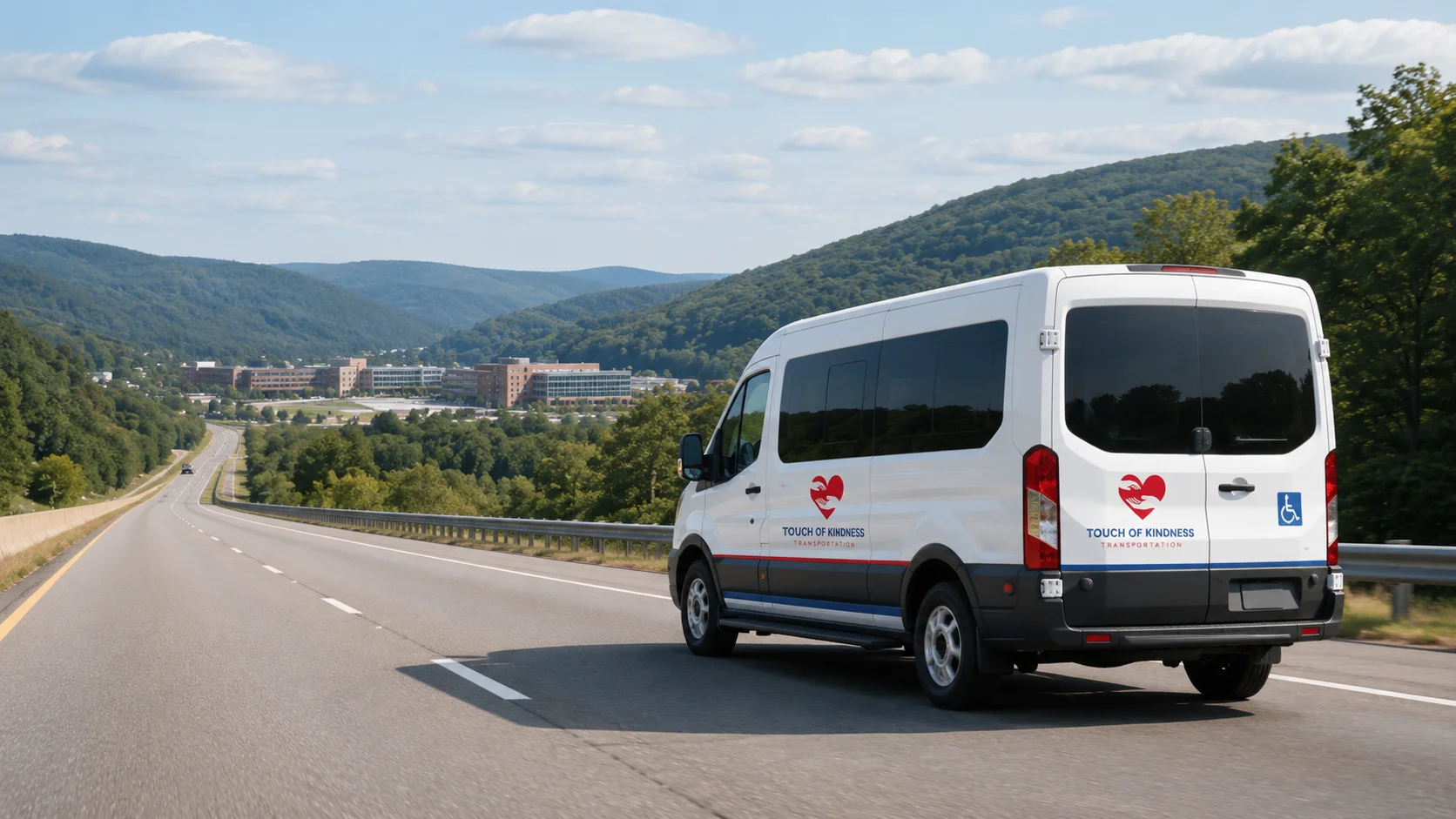
Common local and regional medical destinations include:
- Geisinger Wyoming Valley Medical Center
- Richard and Marion Pearsall Heart Hospital
- Frank M. and Dorothea Henry Cancer Center
- Wilkes-Barre General Hospital
- Geisinger South Wilkes-Barre
- Allied Services Wilkes-Barre Rehabilitation Hospital
- Wilkes-Barre VA Medical Center
- Geisinger Community Medical Center
- Moses Taylor Hospital
- Regional Hospital of Scranton
- Allied Services Scranton Rehabilitation Hospital
- Geisinger Cancer Center in Dickson City
- Geisinger Medical Center in Danville
- Lehigh Valley Hospital–Cedar Crest
- Penn Medicine hospitals in Philadelphia
- Jefferson Health facilities
- Wills Eye Hospital
- Memorial Sloan Kettering Cancer Center
- Hospital for Special Surgery
How Much Does Private NEMT Cost?
Private NEMT prices can vary based on mileage, the required vehicle, passenger-assistance needs, waiting arrangements, tolls, parking, travel date and availability.
- Is the quote one-way or round trip?
- Are mileage, tolls and parking included?
- Is waiting time included or billed separately?
- Is there a cancellation or rescheduling policy?
- Is an attendant or additional passenger included?
- What payment methods are accepted?
Do not assume that Medicare, Medicaid or another insurance plan will reimburse a privately arranged trip. Verify coverage and provider participation before booking.
How to Choose a Safe NEMT Provider
Before trusting a provider with a patient or family member, ask:
- Does the company offer the correct vehicle for the passenger’s mobility level?
- How are wheelchairs and passengers secured?
- What assistance will the driver provide at pickup and arrival?
- Are drivers trained and background checked?
- Is the company properly insured?
- How are delays, appointment changes and return trips handled?
- Can a caregiver ride along, and is advance notice required?
- Who should the family or facility contact if the schedule changes?
- Is the quote clear about mileage, waiting, parking and tolls?
Read How to Choose a Safe NEMT Provider in Pennsylvania for a more complete checklist.
Frequently Asked Questions
Can a family member or caregiver ride with the passenger?
Ride-along options may be available, depending on vehicle capacity and the passenger’s needs. Tell the dispatcher about the additional passenger when booking rather than waiting until pickup.
Do I need a doctor’s prescription to book a private NEMT ride?
A prescription is not generally required simply to arrange a private-pay ride. An insurance plan, MATP, healthcare facility or medically necessary ambulance service may require eligibility verification, authorization or medical documentation.
Can NEMT transport a power wheelchair or mobility scooter?
An appropriately equipped provider may be able to transport a power wheelchair or scooter. Provide its dimensions, weight and model information so the provider can confirm that the lift, vehicle and securement system are suitable.
What happens if an appointment runs late?
Return-trip and waiting policies vary. Ask whether the driver will wait, return at a scheduled time or require the passenger to call when ready. Notify the provider promptly when an appointment or discharge time changes.
Is NEMT available early in the morning, at night or on holidays?
Availability depends on the provider, vehicle and location. Touch of Kindness advertises 24/7 availability, including nights, weekends and holidays, but every individual trip remains subject to scheduling and vehicle availability.
Can NEMT take someone from a hospital to a nursing home or rehabilitation facility?
Yes, a medically stable hospital discharge or facility transfer may be appropriate for NEMT when the passenger does not require ambulance-level care. The hospital and transportation provider should confirm the correct vehicle and assistance level before discharge.
Can NEMT provide a ride after sedation or anesthesia?
Possibly, but the procedure center’s policy controls the discharge requirements. Some facilities will not release a sedated patient to a driver alone and require a responsible adult to accompany the patient or stay with them afterward.
When should someone call 911 instead of NEMT?
Call 911 for a possible medical emergency, including chest pain, severe breathing difficulty, stroke symptoms, uncontrolled bleeding, loss of consciousness or a severe injury. NEMT is only for medically stable passengers.
Related Transportation Resources
Arrange a Medical Ride With Touch of Kindness Transportation
Touch of Kindness Transportation provides ambulatory, wheelchair-accessible and non-emergency stretcher transportation for medically stable passengers. The company is based in West Pittston and serves patients, families and healthcare facilities in Northeastern Pennsylvania, with additional Pennsylvania and longer-distance transportation available by arrangement.
When contacting the team, provide the pickup address, destination, appointment time, mobility level, equipment information, desired return trip and any access concerns.
Authoritative References
Medical and insurance disclaimer: This page provides general transportation information and is not medical, legal or insurance advice. Coverage, eligibility and discharge requirements vary. Confirm medical appropriateness with the treating facility or healthcare professional and verify transportation benefits directly with the relevant insurance plan or public program.